

What Canada Reveals Every Time: The Circuit That Breaks Hearts on Purpose
The Circuit Gilles Villeneuve has a pattern. George Russell just became the newest entry in a very long ledger.

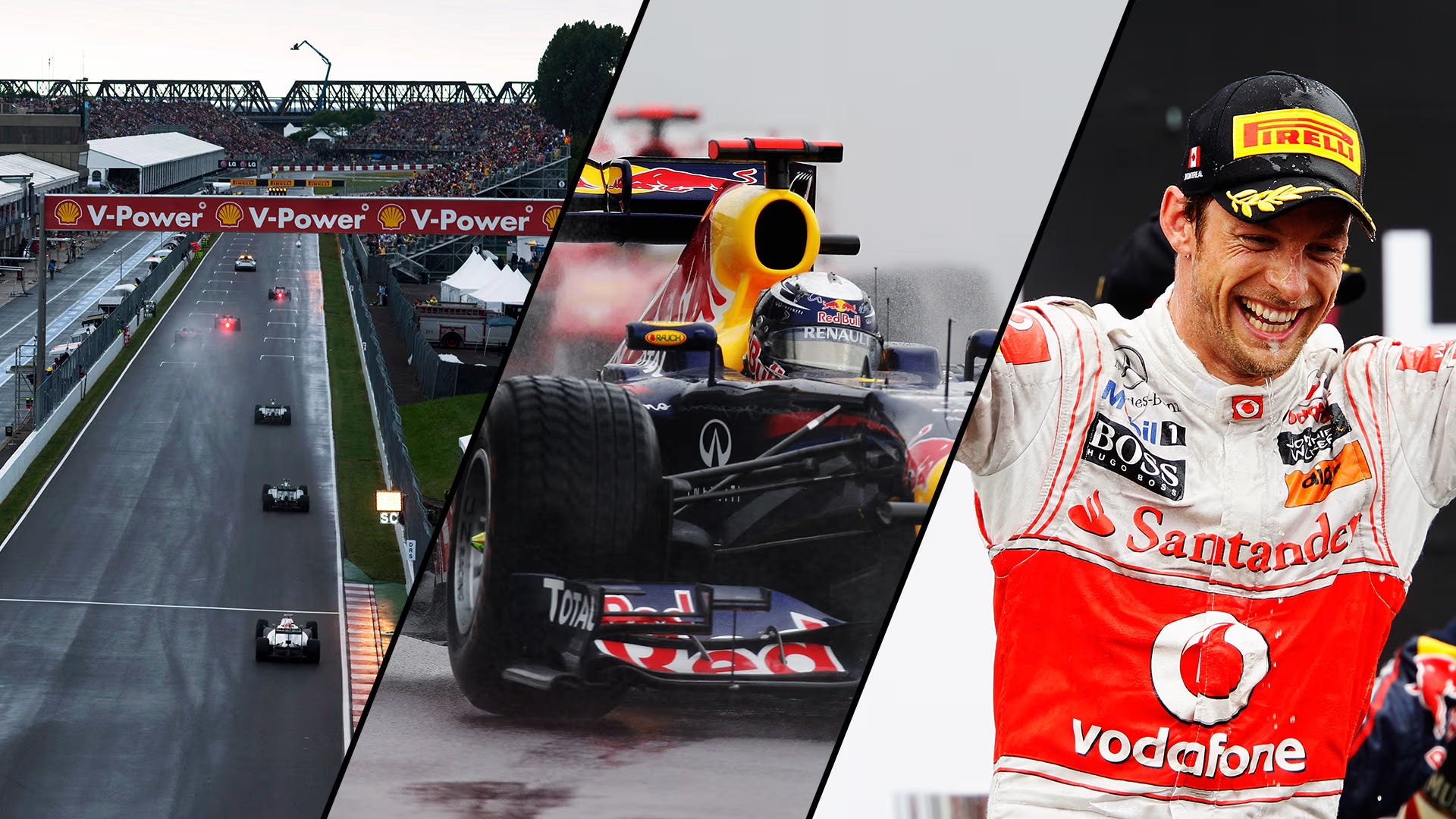
George Russell led the Canadian Grand Prix with 30 laps to go and everything in hand. He had won the sprint race on Saturday. He had the faster car on Sunday. He was the more composed driver all weekend by most measures. Then his power unit failed, his Mercedes rolled to the side of the road, and Kimi Antonelli inherited a race he hadn’t been able to take on the track.
This is exactly what Canada does. It has been doing it since 1978.
The Island
The Circuit Gilles Villeneuve sits on Île Notre-Dame, a man-made island in the middle of the St. Lawrence River. It wasn’t built for racing. It was built for Expo 67, a monument to the idea that humans could manufacture something beautiful and lasting from scratch. When the fair left and the 1976 Olympics came and went, the island’s roads were connected into a circuit and Formula One came calling.
Neptune rules islands. Neptune rules bodies of water and the illusions that live just beneath the surface of things that seem solid. If you want to understand why this track does what it does to people who should win, Neptune is where you start - not as decoration, but as an actual interpretive tool.
The pattern here is too consistent to be random. Leads evaporate. Mechanical failures arrive precisely when they shouldn’t. Drivers who should cruise to the finish find themselves instead explaining to television cameras what went wrong. Neptune dissolves certainty. This is the circuit Neptune built.
The Founding Myth
The first race at this circuit was October 8, 1978. Jean-Pierre Jarier led early in a way that made the result feel like a formality - pulling away cleanly, doing nothing wrong. Then an oil leak ended his race somewhere past the halfway point - it got into the brakes, the car was done, and that was that. Gilles Villeneuve, starting third in his Ferrari, inherited the lead and won his first Formula One race in front of over 72,000 of his own people.
Villeneuve was a Capricorn. January 18, 1950. The sign of the mountain climber, the driver who earns through sacrifice and sheer refusal to quit. He drove like a man who had something to prove to the planet and had not yet proven it. And Canada gave him his first win not cleanly, but through someone else’s car dissolving beneath them.
He didn’t know that. He was too busy being euphoric on the podium. But the circuit had announced itself.
Villeneuve never won a world championship. He spent his career being faster than the results could capture, more brilliant than the standings would show. He died in 1982, during qualifying in Belgium, and the circuit was renamed for him that same year. The man this track honors is the man who proved - maybe more than anyone in F1 history - that deserving something and having it are two completely different things.
This is the circuit Neptune built, and a Capricorn consecrated it. Read into that what you will.
The Wall
In 1999, the final chicane at this circuit earned a nickname. Three world champions - Damon Hill, Michael Schumacher, and Jacques Villeneuve, son of Gilles - all crashed at the same corner during the same race weekend. Three separate incidents. Three names that shouldn’t be anywhere near a barrier. One wall.
The wall didn’t care. It doesn’t care now.
The Wall of Champions isn’t particularly difficult in the abstract. Drivers take it in second gear at around 90mph. It’s not Maggotts-Becketts. It’s not Eau Rouge. It’s a chicane. And yet it has collected, by some counts, fifteen combined Formula One world championships worth of crashes since it earned that name. The lesson is the same every time: status doesn’t come with a pass.
Saturn energy, in concrete form.
Canada’s Inverse Gift
Here’s the thing about Neptune. It doesn’t only take. Sometimes it gives in ways that make no sense on paper.
2011: Jenson Button is last. Not almost last - dead last. He has had two separate collisions with other drivers, a drive-through penalty, and six pit stops. There are 30 laps left. The race has already been suspended for two hours due to torrential rain. At 4 hours, 4 minutes and 39 seconds, it will go down as the longest Formula One race in history. And then Button wins. He passed Sebastian Vettel on the final lap. He came from twenty-first place.
He did it at Circuit Gilles Villeneuve, because of course he did. The island doesn’t only dissolve certainty. Sometimes it dissolves the impossible in the other direction.
Neptune gives improbable gifts as often as it takes things away. It just doesn’t ask your opinion first.
What This Weekend Added
Russell’s power unit failure on lap 30 is now the latest entry in a ledger that goes back forty-eight years. He led. The car stopped. The points went elsewhere - 43 of them, swinging to Antonelli in a single afternoon.
The sprint had already been a story. Antonelli hounded Russell through the opening laps, went off track twice in the fight, had Toto Wolff on the radio asking him to bring the frustration inside the building. Russell won Saturday. Sunday was categorically different. Antonelli couldn’t get past Russell when it was a fair fight. He didn’t need to.
Lewis Hamilton took second for Ferrari, his best finish in red. Max Verstappen took third, his first podium of 2026. Both of those matter for the longer season arc. Both are sidebars.
Painted on the asphalt near the start-finish line at this circuit are the words: Salut Gilles. Hello, Gilles. A greeting for a man who won the first race here and died four years later without a championship. The circuit has been asking the same question ever since - not who is fastest, but who the island decides to let keep it.
What do you think Canada costs more of: pace, or luck?
If you know someone who’d appreciate an F1 newsletter that takes both the sport and the sky seriously - send them this one.
Sarah O’Keefe is a front-end software engineer, writer, and new mom based in Charlotte, NC. She writes about tech, the texture of everyday life, and a lot of Formula One. Subscribe above for free to receive new posts and support her work.